
Tips for saving money
Being a good saver has plenty of advantages beyond your short-term financial goals. It can be the difference between keeping your head above water during difficult financial times and being in financial hardship.
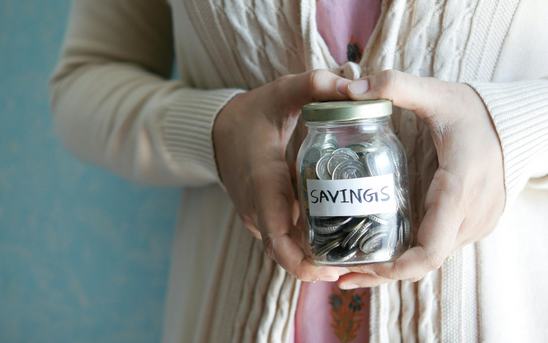
Here are our tips to help you become a better saver.
Set clear goals and plan ahead
1. Set a savings goal
Saving is easier when you have a goal in mind. It might be a holiday, a house deposit, or just a rainy-day fund.
To work out the amount you’ll need, be realistic about what you can afford to save each week, fortnight or month. You can use savings apps to create a savings goal and track your progress. For example, if you want to save $1,500 for a trip to Bali in six months, that’s $62.50 a week. Apps can track that goal so you can easily see your progress and stay motivated.
2. Make a budget
A well-planned budget will get you started on your savings path. A budget is a plan that shows how much money you earn, spend and save. It makes it easier for you to plan ahead for bills and groceries, see where you’re overspending, and find ways to save more money.
Many people follow the 50/30/20 budgeting rule:
- 50% of your income on needs (rent, food, bills)
- 30% on wants (streaming services, eating out)
- 20% on savings or debt.
However, the right breakdown for you will depend on your own goals and finances.
3. Track your expenses
Keeping track of what you spend will help you budget and save. It makes it easier to see where you can cut back on costs and put extra money into your savings account. You can easily track your expenses using free apps.
Cut costs and free up cash
4. Cancel unused subscriptions
When you put together your budget, make sure you include all the services you subscribe to. This might include TV and music streaming services, news subscriptions or app subscriptions. Some of these services might only be a few dollars a month, but over time you might be paying more than you realise. If you don’t use these services often (or you’ve forgotten you even paid for them), cancel your subscription and move that money into your savings.
It adds up quicker than you think. For example, if you cancelled just three subscriptions that were costing you $15 each per month, you could end up saving $540 in a year.
5. Shop around for discounts and rewards programs
- Get creative with your shopping habits and make sure you’re getting the best price by shopping around for deals, specials and rewards.
- Browse online to quickly compare prices on both everyday purchases and big spends.
- Rethink your shopping habits and look at buying commonly used items in bulk or choosing generic brands.
- Get multiple quotes to compare the price of insurance premiums or electricity plans.
- Look for credit cards with rewards points that you can redeem for gift cards, cashback and more.
- Cut down on the cost of essentials by signing up for programs like Everyday Rewards(Woolworths) and Flybuys(Coles).
6. Pay off debt
Getting on top of debt will help you feel more in control of your financial situation. Make sure you factor debt repayments into your budget, and look into whether debt consolidation is an option for you.
Speak to us if you need help budgeting to pay off debt.
7. Refinance your home loan
If you have a home loan, refinancing could help you save money. By refinancing your loan, you could find one that has a more competitive interest rate with better features, allowing you to make the most of your home loan while freeing up a bit of extra cash.
For example, if you refinance a $500,000 home loan to a rate 0.75% lower, you could save around $230 a month. Use our home loan calculator to check how much you might be able to save on your home loan repayments.
Optimise and automate your savings
8. Open the right savings account
Open a savings account to earn interest on your money. Different savings accounts have different benefits, like bonus interest or flexible withdrawals, so compare multiple accounts to choose the best savings account for you.
Another option is an untouchable savings account like a term deposit. A term deposit is a type of account where you lock the money into the account for a certain time and interest rate. It’s possible to earn higher interest if you lock the money away for longer, and it’s a little harder to access your money and spend it.
9. Automate your savings
Just like your phone or power bill can be direct debited, you can set up automatic transfers for your savings goals too. Simply set up a regular payment to go into your savings account every day, week, fortnight, or month.
10. Automate your bills
If you struggle to remember to pay your bills on time, set up regular payments so the money is transferred out of your account on time. This way, the bill is paid even if you forget about the due date. You’ll just need to make sure there’s enough in your account to cover the outgoing payments.
11. Hide your savings account
Some banks will allow you to hide your savings account. This means you won’t see the balance when you log in.
12. Shift your mindset
Changing how you think about saving can make a big difference. Instead of seeing saving as giving things up, try to see it as a way to reach your goals and feel more secure financially. Start with clear and realistic goals, like saving for a holiday or setting aside money for emergencies. Celebrating small achievements can help you stay motivated. Using simple tools, such as an app or a chart, can help you see your progress and make saving feel more rewarding.
It can also help to think twice before spending. Ask yourself if you really need something, or if that money could be better used later. Over time, these small habits can help you feel more confident about your money and make saving feel easier and more natural.
Source: NAB
Reproduced with permission of National Australia Bank (‘NAB’). This article was originally published at https://www.nab.com.au/personal/life-moments/manage-money/budget-saving/money-saving-tipsNational Australia Bank Limited. ABN 12 004 044 937 AFSL and Australian Credit Licence 230686. The information contained in this article is intended to be of a general nature only. Any advice contained in this article has been prepared without taking into account your objectives, financial situation or needs. Before acting on any advice on this website, NAB recommends that you consider whether it is appropriate for your circumstances. © 2026 National Australia Bank Limited (“”NAB””). All rights reserved.
Important: Any information provided by the author detailed above is separate and external to our business and our Licensee. Neither our business nor our Licensee takes any responsibility for any action or any service provided by the author. Any links have been provided with permission for information purposes only and will take you to external websites, which are not connected to our company in any way. Note: Our company does not endorse and is not responsible for the accuracy of the contents/information contained within the linked site(s) accessible from this page.